I earned an LLM and a JSD from Yale Law School and later a PhD in Sociology from the University of Michigan. At Michigan, I was trained in an intellectually expansive area called “Power, History, and Social Change.” After receiving my PhD in 2013, I served as a Junior Fellow in Harvard’s Society of Fellows from 2013 to 2016, where I was constantly in conversation with scholars across the humanities, social sciences, and natural sciences. My training in law and sociology—and my exposure to a wide range of disciplines—continues to shape the questions I ask and how I approach research.
My research interests are also deeply rooted in my personal experiences. I grew up in Taiwan during its transition from authoritarian rule to democracy and came of age in the aftermath of its “economic miracle.” Witnessing these profound political and economic transformations sparked my enduring interest in how large-scale social change unfolds and affects people’s lives.
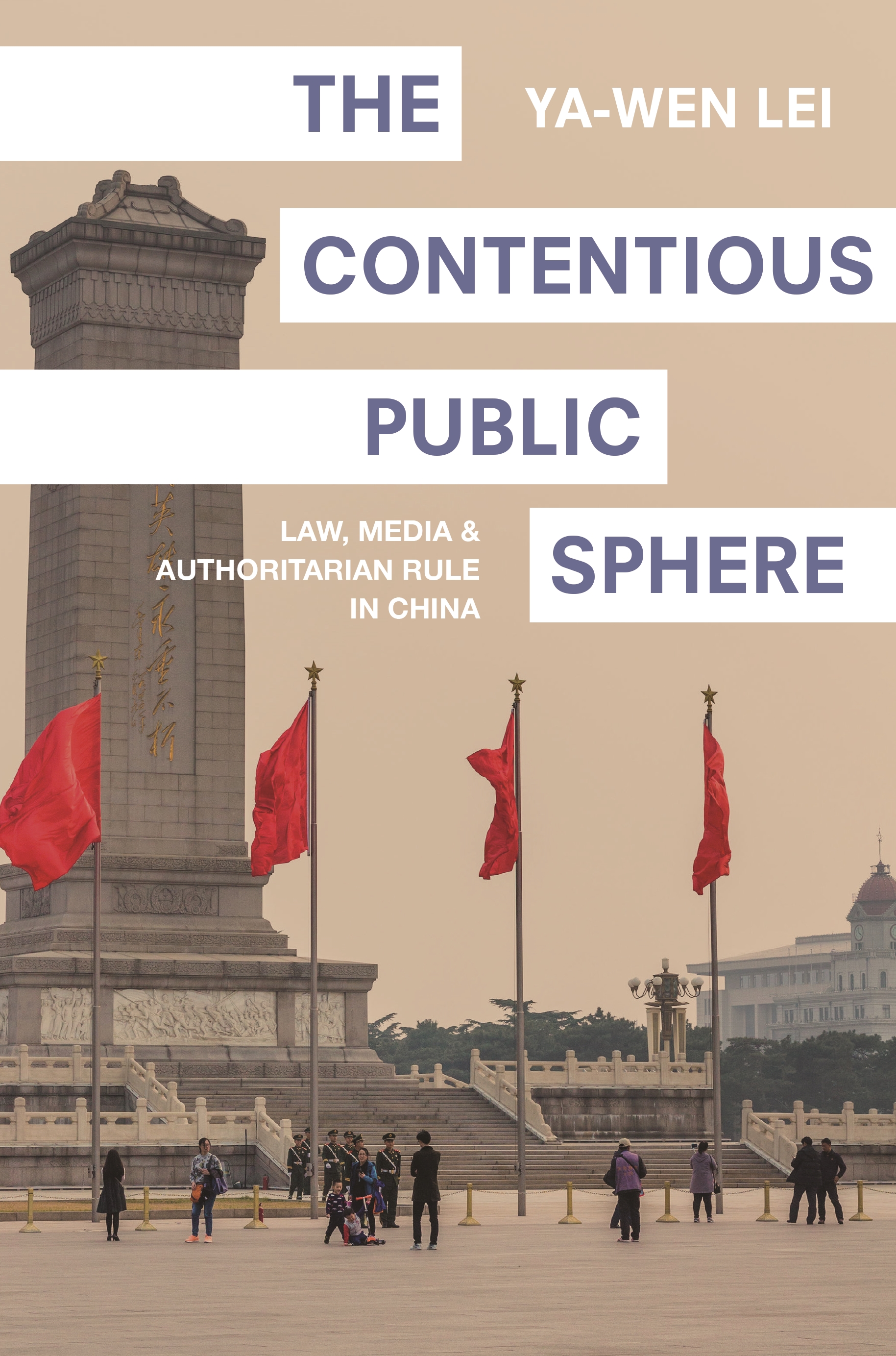
My book projects reflect this intellectual orientation. My first book, The Contentious Public Sphere: Law, Media, and Authoritarian Rule in China, examines how law, the media, and the internet unexpectedly enabled the emergence of a contentious public sphere under authoritarian rule, as well as how the Chinese state subsequently sought to contain it. My second book, The Gilded Cage: Technology, Development, and State Capitalism in China, investigates China’s pursuit of technology-driven development and its consequences for the state, businesses, workers, and citizens. The book situates this transformation within the transnational context of neoliberal globalization, through which the United States actively facilitated China’s integration into the global economy. It concludes as that era begins to unravel amid intensifying geopolitical tensions between the United States and China.
My current book project takes up the story from the other side of this geopolitical transformation. It examines how the United States is using geopolitical leverage and industrial policy to rebuild advanced manufacturing, particularly by seeking to relocate advanced semiconductor production from Taiwan to the United States. Focusing on TSMC’s expansion into Arizona, the project explores how geopolitical competition reshapes states, industries, organizations, work, and local communities across national borders.
Methodologically, I am primarily a qualitative and comparative sociologist. Substantively, my work brings political sociology into conversation with economic sociology, the sociology of work and labor, science and technology studies, law and society, development, and China studies.
My scholarship has been recognized with awards and fellowship support from the American Sociological Association, the Society for the Advancement of Socio-Economics, the Law and Society Association, the Paris Institute for Advanced Study, the American Academy in Berlin, and the Chiang Ching-kuo Foundation, among other institutions.
Outside of work, I enjoy running and swimming—both very slowly—taking long walks, and learning French. I travel regularly throughout Asia and Europe, enjoy sharing meals with my students, and make pretty good Hungarian chicken paprikash.